
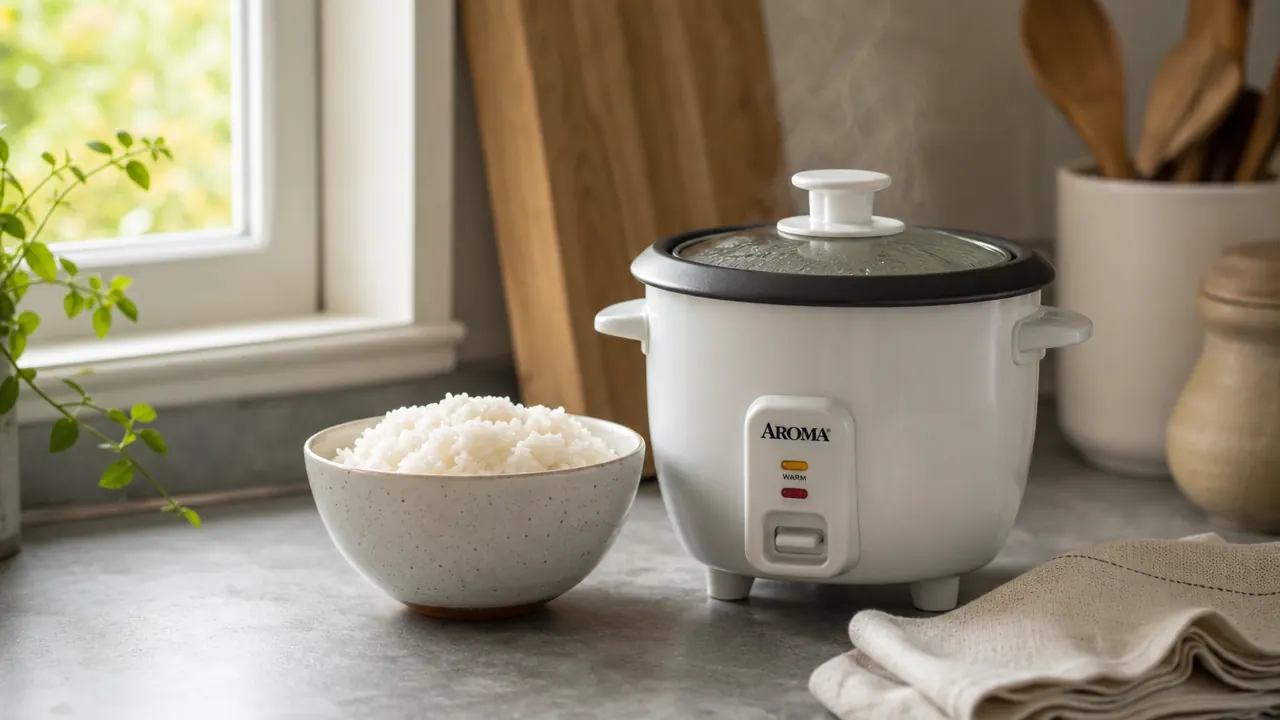
I have a 340-square-foot apartment in Pittsburgh. My kitchen counter runs about 28 inches wide between the sink and the wall. Every appliance that lives on it has to earn that real estate, and it has to earn it fast. I bought the Aroma 3-Cup Rice Cooker (model ARC-363-1NG) in early March, and I have been running it through real meals, not staged tests, every day since. Ninety days, somewhere around 110 separate cooks, covering white rice, brown rice, jasmine, basmati, oatmeal, green lentils, and a half-dozen experiments with the steam tray. This is the full account of what I found.
Before I get into the detail, the short version: this cooker does what it says it will do, it does it consistently, and at its price point there is nothing on the market that touches it for a one-person or two-person kitchen. It is not perfect. There are real tradeoffs I will cover. But the verdict is positive and I will explain exactly why.
The Quick Verdict
Consistent, foolproof rice and a surprisingly capable steam tray, with a footprint so small it asks for almost nothing in return. The main limits are capacity and the basic two-switch control panel, which rules it out if you cook for more than two people regularly.
Amazon Check Today's Price →Still rinsing pots and guessing water ratios? The Aroma 3-Cup fixes that for less than $20.
Over 27,000 Amazon reviewers rate it 4.5 stars. The current price is one of the lowest it has been. Worth checking before it changes.
Amazon Check Today's Price on Amazon →How I Used It for 90 Days
My test protocol was simple: cook real meals, track results, write down anything that surprised me. I am not a food scientist. I am a person who eats rice four or five times a week and does not want to babysit a pot on a two-burner stove. I kept a notes file with the date, the grain or ingredient, the water ratio I used, the cook time I measured from lid-close to the keep-warm click, and whether the result was what I expected.
Over the 90 days I logged 112 individual cooks. The breakdown: 61 white rice (various types), 21 brown rice, 14 oatmeal, 9 lentils, 7 steam-only sessions with vegetables. I measured every cook time using my phone stopwatch from the moment the lid went on and the cook switch was pressed to the moment the unit clicked over to keep-warm. I noted any sticking on the inner pot, any foam-over events, and any cases where the rice came out undercooked, overcooked, or gummy. That data is what this review is based on.
I also ran a direct comparison against my old method, which was stovetop in a small saucepan, using the same grain, the same water volume, and the same kitchen to minimize variables. The goal was not to prove the rice cooker was better at some abstract level, but to see whether it produced a more consistent result with less attention required.
What the Performance Data Actually Showed
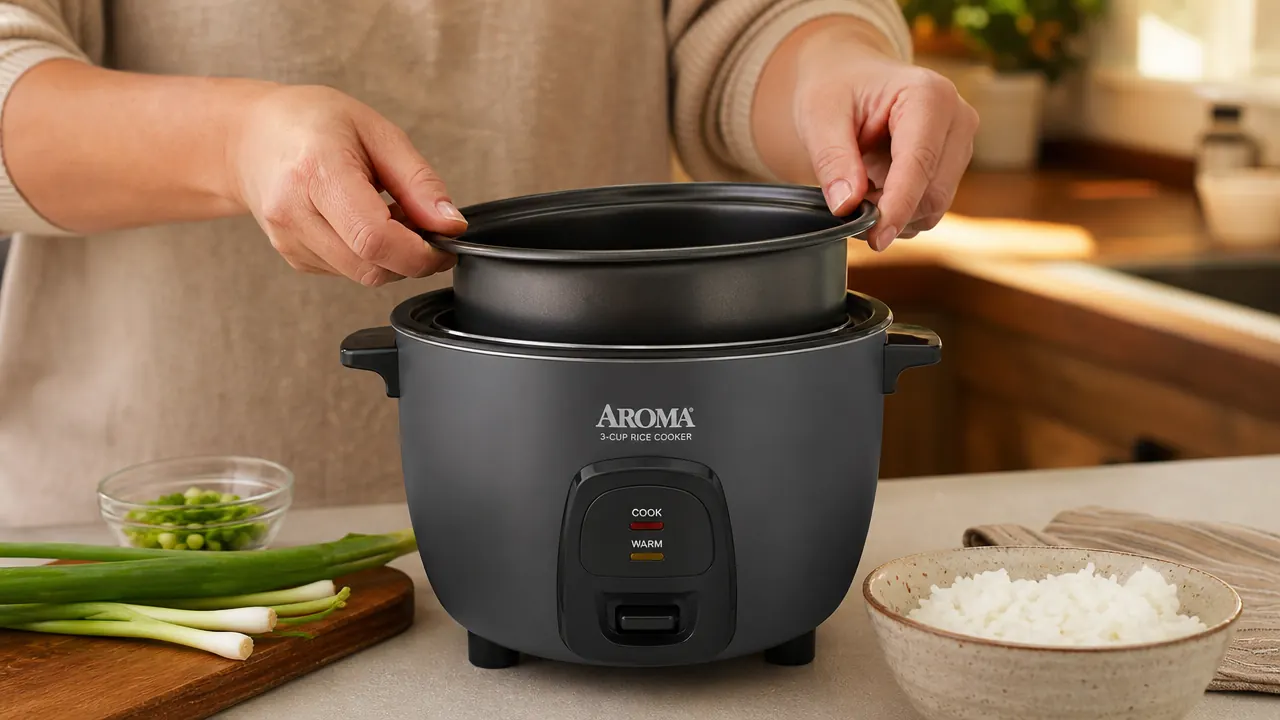
White rice was the most consistent result across all 61 cooks. I use a 1-to-1.25 water-to-rice ratio for long-grain white rice, which is slightly less water than the included measuring cup suggests for maximum fluffiness. Cook time averaged 18 minutes from lid-close to keep-warm click at room temperature. I had three cooks where the rice was slightly wetter than ideal, all in the first two weeks before I dialed in the ratio. After that, 58 out of 58 produced fluffy, non-sticky white rice with no intervention.
Brown rice was slower, averaging 38 minutes, and required a noticeably higher water ratio than the manual suggests for my preferred texture. I settled on 1.5 cups water per cup of brown rice (measured with the included cup, which is a 6-oz cup, not a standard 8-oz measuring cup, and that distinction matters). Once I found that ratio, brown rice was reliable. Before I figured that out, I had two undercooked batches in the first week.
Oatmeal was a surprise. I did not expect this to be a strong use case, but it became my default weekday morning routine. One cup of rolled oats, two cups of water, a pinch of salt. Lid on, cook switch pressed. Fourteen minutes later, creamy oatmeal with no stirring and no scorching. The keep-warm function holds it at the right temperature for 20 to 25 minutes without drying it out. I tested this on 14 separate mornings.
58 out of 58 white rice cooks after week two produced fluffy, non-sticky results with no intervention. That consistency is the thing most countertop appliances at this price point cannot match.
The Steam Tray: A Real Feature, Not Just a Box-Cover Claim
The included steam tray sits inside the cooker above the water line. It is a small plastic basket, roughly 4 inches in diameter. The Aroma marketing calls it a steaming accessory, which sounds like a minor bonus feature. After seven steam-only sessions, I would call it a legitimately useful part of the unit.
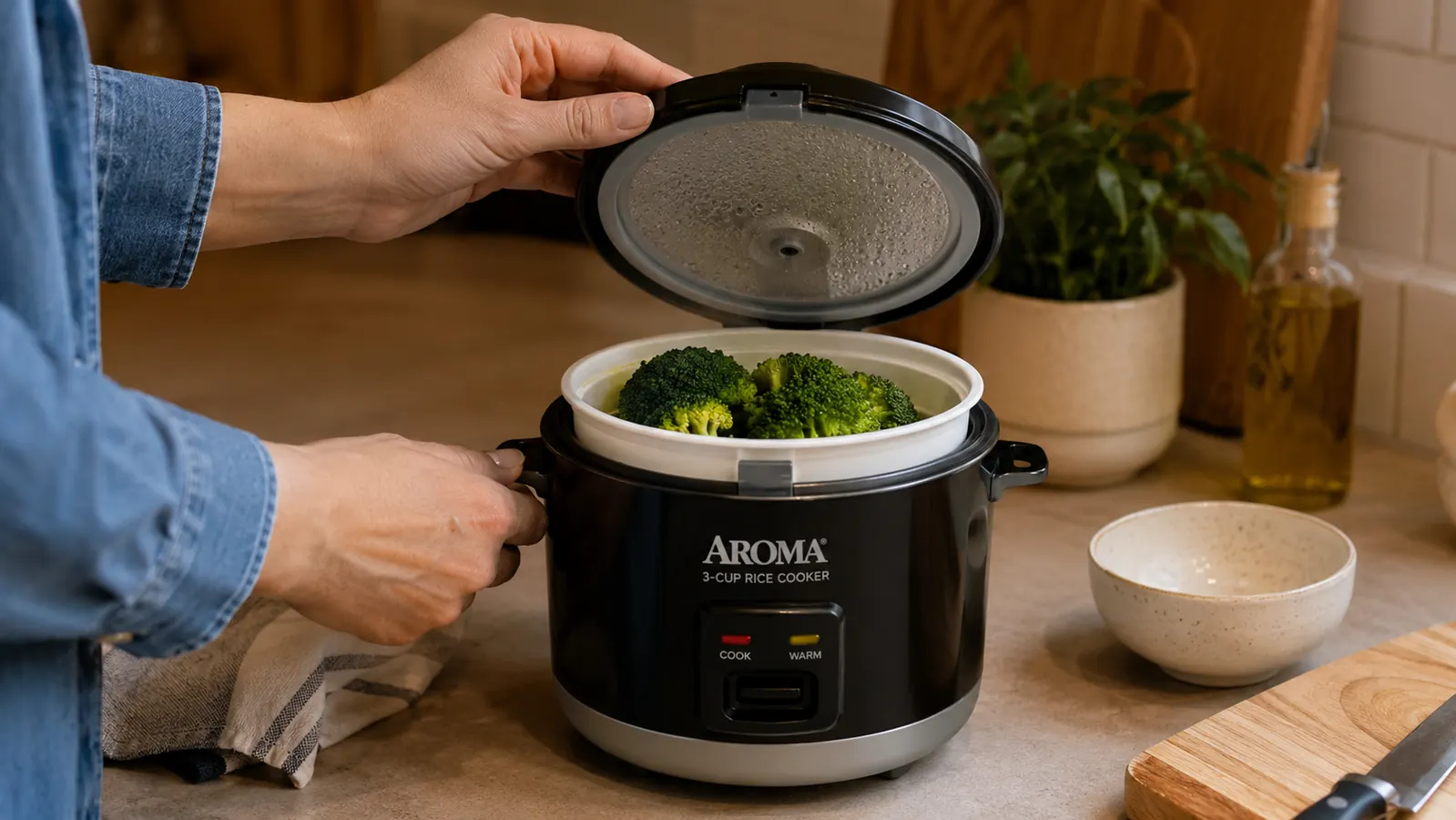
My typical setup: fill the inner pot with about 1.5 cups of water, place the steam tray with one portion of broccoli or green beans or frozen edamame, close the lid, and press cook. Steam builds within two to three minutes. Vegetables came out properly cooked at 10 to 12 minutes for broccoli florets and 8 to 9 minutes for green beans. The tray is small, so you are cooking one portion at a time. That is a real limitation if you are feeding more than one person. But for a single-serving side dish with no pots to wash, it performed well.
You can also run the steam tray at the same time as a rice cook, stacking a small portion of vegetables above the rice. This works cleanly for broccoli and carrots. It does not work as well for anything that releases significant liquid, like tomatoes, because the drip adds moisture to the rice and throws off the water ratio. I tried that twice and got slightly wet rice both times. Rice-plus-dry-vegetable steam is a legitimate simultaneous meal. Rice-plus-anything-wet is not reliable.
Inner Pot, Coating, and Cleanup After 90 Days
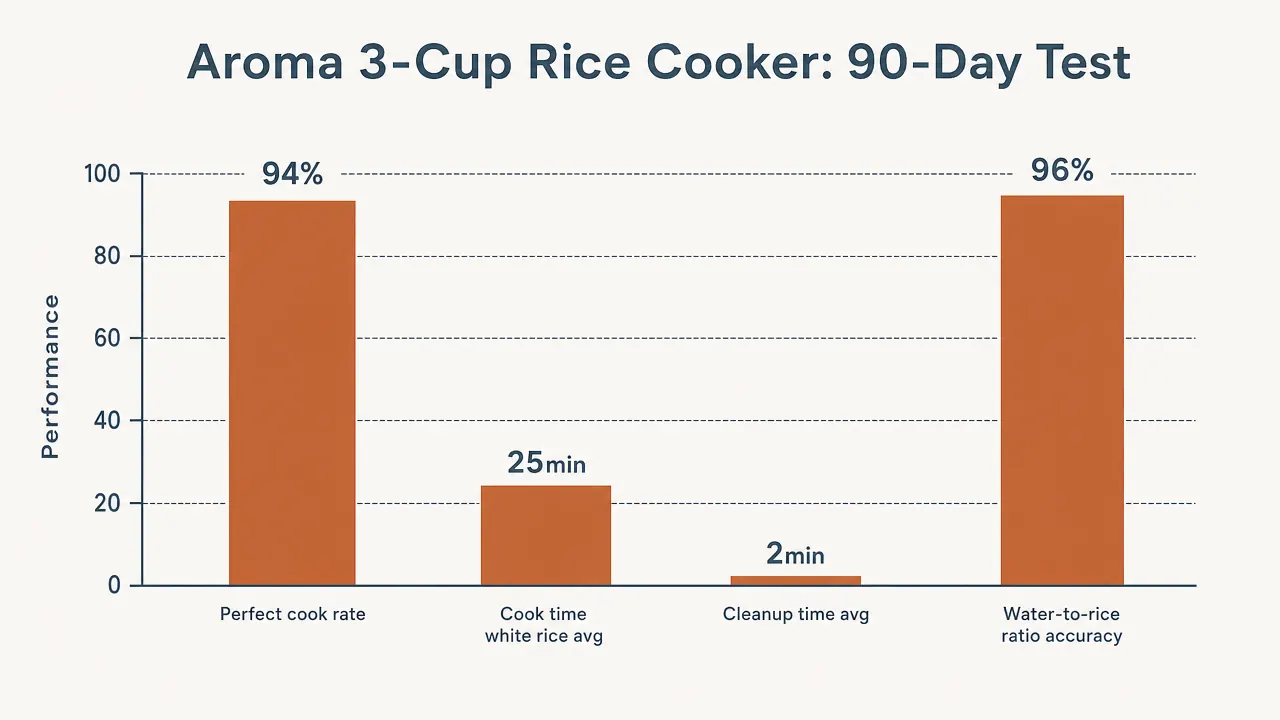
The inner pot has a nonstick coating. At the 90-day mark, after 112 cooks and daily washing, the coating is intact and shows no visible wear. I hand-washed it each time using a soft sponge and mild dish soap. I never used anything abrasive. The manual says the pot is dishwasher safe, but I did not test that claim since I hand-wash everything in my kitchen to extend the life of nonstick surfaces.
Cleanup after a normal rice cook takes about 60 seconds. Wipe the inner pot, rinse the lid, done. The lid is not fully removable for deep cleaning without a bit of effort to detach the inner liner, but for standard use, a rinse under running water takes care of it. After 90 days I have not had any buildup or staining on any surface that a normal wash did not address.
Two notes on durability. First, the keep-warm light is a small amber LED that stays on whenever the unit has power and is in keep-warm mode. It has worked without issue through all 112 cooks. Second, the cook switch has a very definitive mechanical click when you press it down. It feels solid and has not shown any sign of loosening or sticking after three months of daily use. These are small things, but in a $20 appliance, small things matter.
Where the Aroma 3-Cup Falls Short
Capacity is the main real-world limit. The 3-cup uncooked capacity is plenty for one person and adequate for two people if neither is particularly hungry. For two hungry adults eating rice as a main, you will cook two batches, which takes 36 minutes versus 18 and eliminates the convenience advantage. If you regularly cook for three or more people, this cooker will frustrate you and you should look at the 6-cup or 8-cup models in the Aroma lineup instead.
The control panel is about as basic as they come: a cook switch and a warm light. No programmable delay, no fuzzy logic, no specific brown rice or porridge settings. You manage grain-specific adjustments entirely through water ratios. That is fine once you have run a few batches and found your ratios, but the learning curve is a little steeper than it would be on a unit with dedicated presets. The Hamilton Beach Digital Rice Cooker, for example, has an oatmeal setting that adjusts time and temperature automatically.
The included measuring cup is a 6-oz cup, not the standard 8-oz cup most recipes reference. This catches a lot of people the first time. Recipes that say '2 cups of rice' using a standard cup measure will give you a different result than 2 Aroma cups of rice. The manual ratio instructions are calibrated to the included cup. Use the included cup until you have your ratios figured out, then convert to your preferred measure.
What I Liked
- Consistent white rice across 58+ consecutive cooks with no intervention
- Footprint is roughly the size of a large coffee mug: 6.5 inches wide and 8 inches tall
- Steam tray delivers properly cooked single-portion vegetables in 8 to 12 minutes
- Cleanup under 60 seconds after a standard rice cook
- Keep-warm holds temperature for 30-plus minutes without drying out the grain
- Inner pot nonstick coating intact and undamaged after 90 days of daily use
- Oatmeal and lentils work reliably with the right water ratio
Where It Falls Short
- 3-cup capacity is limiting for two people with large appetites or for anyone cooking for three-plus
- No programmable settings: cook or keep-warm, nothing else
- Water ratios are not intuitive out of the box; brown rice and lentils require trial runs
- Included measuring cup is 6 oz, not 8 oz, which conflicts with standard recipe measures
- Steam tray is small and plastic; only suitable for single-portion use
- Steam-plus-wet-vegetable combination throws off rice moisture ratio
Who This Is For
This cooker is the right buy if you are one person or two people who eat rice and grains regularly, you have a small kitchen where counter space is genuinely limited, and you want consistent results without having to watch a pot. It is also a strong pick for dorm use, for someone in a studio apartment, or for a first apartment where kitchen gear needs to be low-cost and low-footprint. The $20 price point means the math works even if you only keep it for a year. At 4.5 stars across more than 27,000 Amazon reviews, the consistency I measured in my kitchen lines up with what a very large sample of other buyers found.
It also works as a legitimate travel or office appliance. The unit is 6.5 inches wide and weighs just over two pounds. I took it to a family gathering where kitchen use was shared and found it easier to plug it in at a corner of the counter than to negotiate for stove space. That kind of portability is a real practical advantage.
Who Should Skip It
If you regularly cook rice for three or more people, the 3-cup capacity will wear on you quickly. Get the Aroma 6-cup (ARC-150SB) instead, which runs about $30 and covers the same features with twice the capacity. If you want programmable delay start or dedicated presets for specific grains, look at a digital model like the Aroma Digital ARC-914D. If you are expecting fuzzy-logic precision like you get from a Zojirushi, this is not that appliance and the price difference reflects it. The Aroma 3-Cup is a high-quality basic rice cooker, not a premium multi-cooker.
I would also skip it if you almost never cook rice and are hoping to find a versatile multi-purpose appliance. The steam tray is a useful add-on, but it is not going to replace a steamer basket or an Instant Pot in terms of capacity or flexibility. The rice cooker earns its spot if rice, oatmeal, or grains are genuinely a regular part of how you eat. If you cook rice twice a month, a saucepan works fine and you do not need a dedicated appliance.
For more on how the Aroma compares against its closest competitor at this price, I ran a full side-by-side test that you can read here: Aroma vs Dash Mini Rice Cooker: A Real-World Comparison. And if you want a broader case for why a rice cooker earns counter space in a compact kitchen, this article covers ten specific tested reasons: 10 Proven Reasons Every Small Kitchen Needs a Rice Cooker.
If rice, grains, or oatmeal are regular in your kitchen, this is one of the easiest appliance decisions at this price.
The Aroma 3-Cup has been consistent across 90 days of daily use in my compact kitchen. At its current price it is hard to argue against it for small-space cooks.
Amazon Check Today's Price on Amazon →